
Reviewed · WALKING TOURS
Zurich Walking Tour: Explore Top Sights & Hidden Gems
Zurich is small, but it is packed with stories. This 2-hour walk strings together the city in a way that makes sense fast, from Zurich HB to Limmat River viewpoints, then into art and ideas that changed Europe. If you want a first taste of Zurich that goes beyond postcards, this route is an efficient way to do it.
Two things I really like: the stop-by-stop pacing hits the big landmarks and the more personal back streets, and the guide style tends to keep it clear, friendly, and question-ready. I also like that the tour keeps practical help in the mix, so you walk away with ideas for what to do next, not just facts.
The main drawback to consider is simple: you only get about two hours, so it is not a slow, linger-and-stay-all-day stroll. You will see a lot, but you will still want to plan time for return visits if anything really grabs you.
In This Review
- Key highlights worth showing up for
- Two Hours for $39, and Why the Value Works
- Zurich HB Bahnhofplatz, and Why This Is the Perfect Start
- Polyterrasse Viewpoint, Old Town and the Limmat in One Glance
- Niederdorf and Münsterhof, Where Everyday Old Town Life Meets Medieval Power
- Grossmünster, St Peter Clock Face, and the Reformation Story in Stone
- Lindenhof Hill to Bahnhofstrasse, Roman Roots and Modern Money
- Cabaret Voltaire and Fraumünster Chagall Windows, Modern Art History Gets Personal
- Zurich Town Hall Over the Limmat, Then Augustinergasse to Finish With Photos
- The Guide Factor, Small Group Comfort, and Why It Changes Everything
- Who This Tour Fits Best
- Should You Book This Zurich Walking Tour?
- FAQ
- How long is the Zurich walking tour?
- Where do I meet, and where does the tour end?
- What time does the tour start, and is it in English?
- Is admission included for the stops?
- How many people are in the group?
- What is the cancellation policy?
Key highlights worth showing up for
- A tight 2-hour route that works well for a first day in Zurich
- Small group size, max 15, so you can actually ask questions
- Iconic Reformation and art stops, including Grossmünster and Fraumünster
- Dada history at Cabaret Voltaire, tied to World War I era Switzerland
- Scenic viewpoints at Polyterrasse and Lindenhof with Old Town and Limmat views
- Practical recommendations that help you plan the rest of your Zurich time
Two Hours for $39, and Why the Value Works
At $39 per person for a roughly 2-hour guided walk, the price is basically you paying for time saved. You are not just paying for a stroll. You are paying for someone to connect the dots between churches, squares, art, and city politics, then point you toward smart next stops.
What helps the value feel real is that the tour visits major places where you typically would spend time figuring out logistics on your own. The stops are organized so you keep moving, and the tour includes the professional guide for the full duration. Even better, each scheduled stop lists admission as free, which keeps you from getting surprise costs as you go.
Another practical plus is group size. With a maximum of 15 people, you do not get stuck behind a crowd the whole time, and you can hear explanations at the main viewpoints without doing the whole head-on-a-swivel routine.
More Walking Tours in Zurich
- Zurich Old Town Walking Tour: 2-Hours
★ 4.6 · 1,008 reviews - Zurich Walking Tour With Cruise and Aerial Cable Car
★ 5.0 · 669 reviews - Zurich Old Town Walking Tour
★ 4.5 · 479 reviews
Zurich HB Bahnhofplatz, and Why This Is the Perfect Start
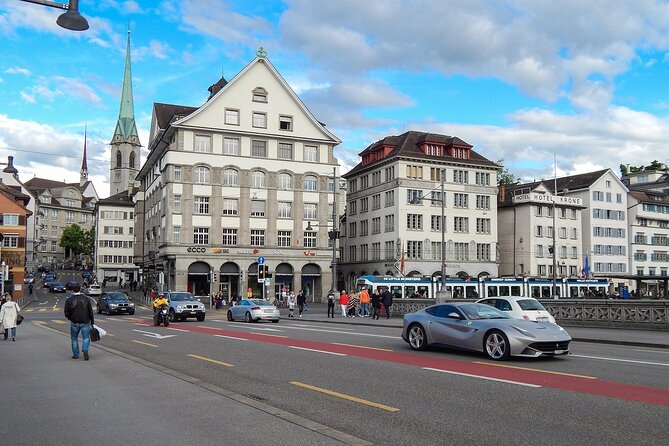
You begin at Zurich HB Bahnhofplatz, under the station’s famous main clock. It is a classic meeting point that locals use without thinking about it, which is exactly what you want on a walking tour start. From the jump, the guide frames Zurich as a transit, economic, and cultural hub, not just a pretty downtown.
Why this matters: if you start by understanding Zurich’s role in the country, the rest of the walk feels organized. You are not just hopping between buildings. You are learning why the city grew where it did, and why people move through this area every day.
A good sign you chose well is how quickly the guide gets you oriented. Stations can be chaotic, but this one is also orderly. Once you are standing at the clock, the tour has a clear direction and rhythm.
Polyterrasse Viewpoint, Old Town and the Limmat in One Glance
Next comes Polyterrasse, one of the best places to see Zurich at once. From here you get the big picture: the Old Town, the Limmat River, and on clear days, you might even catch sight of the Swiss Alps in the distance.
This stop is worth it because it changes how you walk the rest of the city. After Polyterrasse, streets stop feeling random. You can start picturing how the river shapes neighborhood life, and why certain areas became key over centuries.
Small note to keep expectations realistic: views depend on weather. If the day is cloudy, you still get a useful overview of the river and the city core, just with fewer distant surprises.
Niederdorf and Münsterhof, Where Everyday Old Town Life Meets Medieval Power
Then you head into Niederdorf, Zurich’s oldest neighborhood. The vibe here is street-level and human: narrow lanes, cafés, bookish corners, and that artsy feeling that comes from people actually using the space. This is the part of the tour that helps Zurich feel like a place you could live, not just tour.
Right after that, you reach Münsterhof, a major medieval square. This is where the tour shifts from everyday life to the medieval machinery of power. The guide connects Zurich’s religious, commercial, and political development to the shape of the city you can still see today.
The practical value here is that you learn what to notice. In one area, you look for how neighborhoods feel and work day to day. In the other, you learn to read the square like a map of influence and institutions.
If you like photography, this is also a strong segment. The mix of tight streets and open square views gives you variety without wasting time on transit.
A few more Zurich days worth weighing up
- 3 in 1: Zurich Walking Tour – Cruise on the Lake – Cable Car Ride to Felsenegg
★ 5.0 · 227 reviews - Zurich Private Customizable Guided Walking Tour
★ 5.0 · 195 reviews - Swiss Chocolate Walking Tour of Zurich
★ 4.5 · 120 reviews - Zurich: Private City Walking Tour with Polybahn Ride
★ 5.0 · 83 reviews
Grossmünster, St Peter Clock Face, and the Reformation Story in Stone
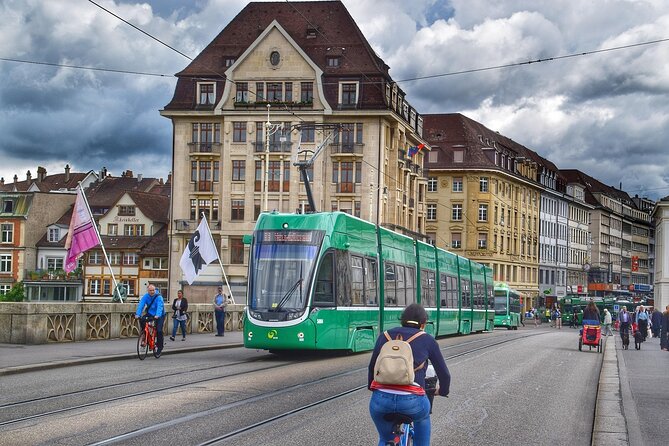
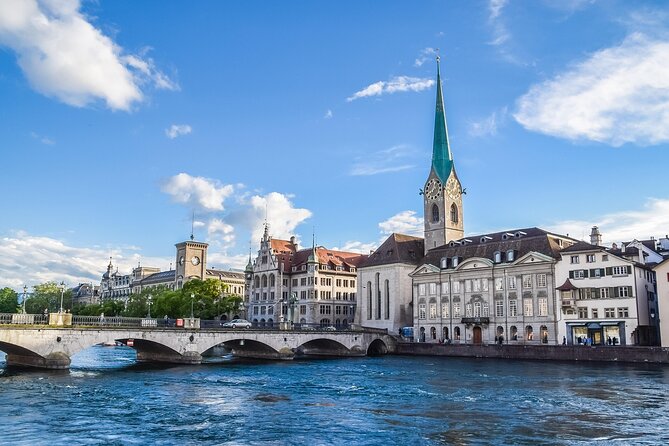
Next up is Grossmünster, Zurich’s iconic church linked to the Protestant Reformation and Huldrych Zwingli in the 16th century. This is one of those stops where the building is already famous, but the guide helps you understand why it mattered in a religious and political sense.
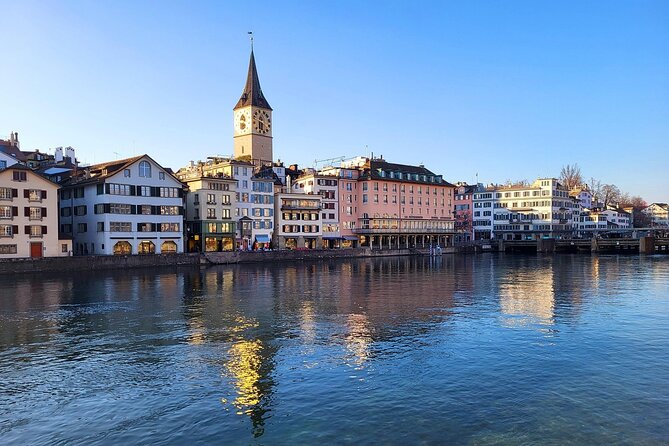
From there, you head to St Peter Church, famous for having the largest church clock face in Europe. It is a fun contrast. One stop talks faith and ideas. The next reminds you how seriously cities take timekeeping, daily life rhythms, and public symbols.
Why I think this pairing works: it prevents the walk from becoming one-track. You are not stuck in purely architectural appreciation. You also get the idea that buildings served real functions, from belief systems to organizing public life.
Lindenhof Hill to Bahnhofstrasse, Roman Roots and Modern Money
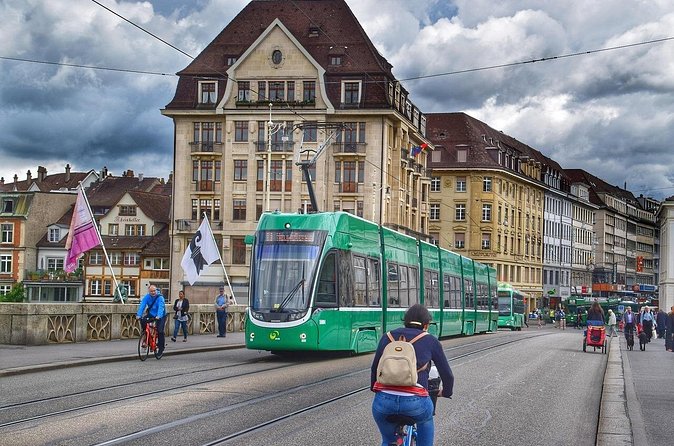
At Lindenhof Hill, you get a historic hilltop park and a sharp view over the Old Town and the Limmat River. The guide discusses Zurich’s Roman origins, which gives context for why the city keeps returning to this kind of vantage point.
This is also where you pause long enough to really look. You can trace the city’s layers with your eyes, and you can see how the river corridor became the spine of development.
Then the tour drops into Bahnhofstrasse, Zurich’s well-known shopping street tied to the city’s financial power and modern urban development. It is a different Zurich than the medieval lanes. Here it feels more planned, polished, and geared to commerce.
One consideration: Bahnhofstrasse can feel flashy if you are hoping for a more rugged, working-class feel. But that is kind of the point. Zurich is not only old stone and church clocks. It is also finance, order, and a certain kind of modern precision. If you accept that contrast, the walk feels more balanced.
Cabaret Voltaire and Fraumünster Chagall Windows, Modern Art History Gets Personal
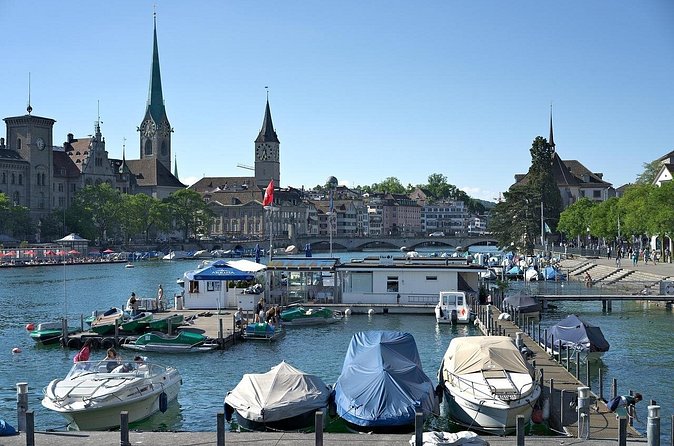
At Cabaret Voltaire, the tone shifts again. This is the birthplace of the Dada movement, an art revolution that grew in Zurich during World War I. Even if you never learned Dada in school, the guide helps you understand why Zurich became a launchpad for a new kind of creative thinking during a dark era.
I like this stop because it proves Zurich can be more than tradition. You see how ideas and culture evolve when the world is stressed, and you leave with a better sense of why people in the city keep showing up for art.
Then comes Fraumünster Church, known for the stained-glass windows by Marc Chagall. This is where the walk merges medieval architecture with a modern art voice. Instead of only looking back, you see a conversation across centuries.
If you are the kind of person who gets excited by how art changes meaning in a specific space, this segment delivers. Even without going inside for long, you get enough context to feel what to look for, and why it belongs here.
Zurich Town Hall Over the Limmat, Then Augustinergasse to Finish With Photos
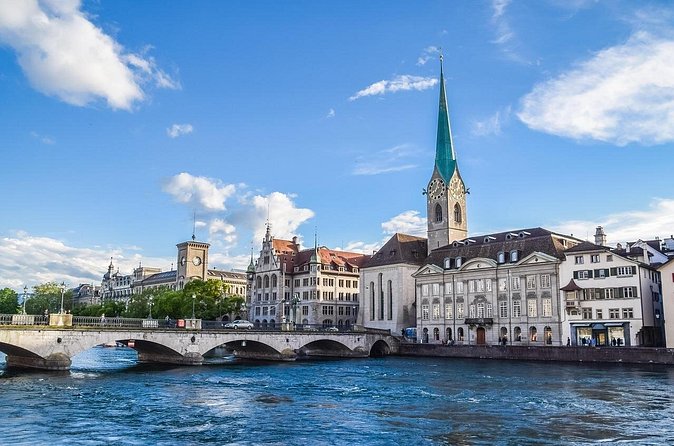
One of the most interesting “big idea” stops is Zurich Town Hall, located directly over the Limmat River. The guide explains the foundations of Switzerland’s political system and the concept of direct democracy.
This helps the entire tour make more sense. Earlier, you learned about medieval power structures in Münsterhof. Here you see how Zurich and Switzerland developed governance based on the direct involvement of citizens. The river location is also a clue, in a practical, architectural way. It underlines that the city’s civic life is tied to its geography.
To close, you end in Augustinergasse, one of Zurich’s picturesque streets with colorful guild houses and historic fountains. It is a strong photo finish because you end where the vibe is warm and traditional, and you are already thinking about where to walk next.
If you still have energy, this ending works like a launchpad. You can keep exploring in a direction that feels natural after the guide lays down the map in your mind.
The Guide Factor, Small Group Comfort, and Why It Changes Everything
The best versions of walking tours are not just about sites. They are about how the guide teaches you to see.
In this one, the guide approach tends to be clear, friendly, and ready for questions. People often highlight guide Gustav, and that fits the feel you want: you should be able to ask about what you just saw, then pivot to what you should do next without the tour becoming a stiff lecture.
I also like that the explanations include practical recommendations, not only historical references. That means you get ideas for restaurants, transport, and places to visit on your own after the 2 hours. For a first-timer, that kind of help is gold. For a return visitor, it can still point you toward spots you might miss.
And because the group is capped at 15, you are less likely to lose your place in the story when you stop for a view or a question. Your attention stays on the walk.
Who This Tour Fits Best
This Zurich walk is a great fit if:
- you want an efficient first introduction to Old Town, churches, and major sights
- you like learning history in a way that connects to how the city functions now
- you prefer small groups, so explanations stay audible and your questions do not get lost
It may be less ideal if you want a super slow pace, or if your priority is spending a lot of time inside museums or churches. This is designed to cover key points well, not to stay forever at one door.
Should You Book This Zurich Walking Tour?
Yes, I think you should book it if you are planning a first Zurich visit and you want your bearings fast. For $39, you get a focused route that covers major landmarks, plus art and ideas at Cabaret Voltaire and Fraumünster, and you get viewpoints that help you understand the city shape.
Skip it only if your schedule is tight enough that you cannot afford a full, structured two hours, or if you already know Zurich well and only want very niche, off-the-map exploration. Otherwise, this is a smart way to turn a short stay into a real feel for Zurich.
FAQ
How long is the Zurich walking tour?
The tour lasts about 2 hours.
Where do I meet, and where does the tour end?
You start at Zurich HB Bahnhofplatz, 8001 Zürich, and the tour ends at Augustinergasse, 8001 Zürich.
What time does the tour start, and is it in English?
The start time is 10:00 am, and the tour is offered in English.
Is admission included for the stops?
Each listed stop shows admission ticket free, and the tour includes the guided walking portion.
How many people are in the group?
The tour has a maximum of 15 travelers.
What is the cancellation policy?
You can cancel for a full refund up to 24 hours before the experience starts.
Newly reviewed around Zurich
- Zurich/Bern/Interlaken/Lucern: Jungfrau & Lauterbrunnen Trip★ 5.0 · 7 reviews
- Zurich: Virtual Reality Arena★ 3.8 · 6 reviews
- Zurich: Stein am Rhein, Rhine Falls & Lake Boat Cruise★ 3.2 · 15 reviews
- Zurich to Rhine Falls: Unforgettable Private Day Trip★ 4.8 · 3 reviews
- Zurich’s best-kept secret: the hidden world of mushrooms!★ 5.0 · 7 reviews
- Zurich: Private tour to Interlaken, Grindelwald & Jungfrau★ 5.0 · 3 reviews
- Zurich: Professional Photoshoot at the Best Spots★ 5.0 · 31 reviews
- Zurich Pub Crawl – Dionysos Zurich Pub Crawl★ 5.0 · 3 reviews
Walking Tours, compared.

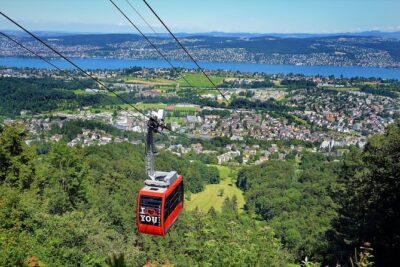
Zurich Walking Tour With Cruise and Aerial Cable Car
Read our review →

Lucerne Walking & Boat Tour: The Best Swiss Experience
Read our review →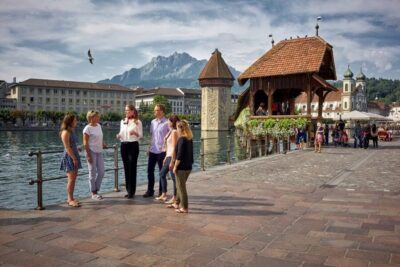

3 in 1: Zurich Walking Tour – Cruise on the Lake – Cable Car Ride to Felsenegg
Read our review →Browse the lists this tour appears in