
Reviewed · HISTORICAL TOURS
Zurich a journey through time, history and the Reformation
Zurich starts as a Roman city and ends up rewriting Europe. This 2.5-hour walk takes you through Zwingli’s reform world and the Old Town streets where belief turned into action. You get stories that connect the big ideas of the Reformation to the exact corners you are standing on.
I especially like two things: the accredited Fraumünster guidance inside one of Zurich’s iconic churches, and the way the tour mixes religious change with real, street-level context. The guide, Bruno, comes across as attentive and personable, and his explanations are clear enough that you do not need a history degree to follow the turns of events.
One consideration: the format is not wheelchair-friendly, and you will be doing a continuous Old Town walk with several short guided stops. If you need lots of long rests, you may want to plan accordingly.
In This Review
- Key highlights you will actually notice
- A short walk where Zwingli turned belief into action
- Heiristeg first, then Zurich’s older layers
- Lindenhof: the viewpoint that makes the city make sense
- Archäologisches Fenster and the Roman heater system
- Churches in rotation: St. Peter, Wasserkirche, and Fraumünster
- Fraumünster time, including the Chagall windows
- Grossmünster and the Zurich reform atmosphere
- Rathausbrücke, legends, and the human side of reform
- Ehgraben and the quiet corners where stories linger
- Price and value: $194 for 2.5 hours that feel focused
- Practical tips so you enjoy it more
- Who this tour is best for
- Should you book this Zurich time-and-Reformation tour?
- FAQ
- What is the duration of the tour?
- Where does the tour start?
- How much does the tour cost?
- Is Fraumünster admission included?
- Which languages are available?
- Is this a private tour?
- What does the tour focus on?
- Which churches are part of the tour?
- What is not included?
- Who is the tour not suitable for?
- What is the cancellation policy?
Key highlights you will actually notice
- Zwingli-focused storytelling in places tied to debates and sermons that shaped the Reformation
- Fraumünster access included, plus time inside to see the Chagall window cycle in the choir
- Celtic and Roman origins shown in the city, not just in a museum
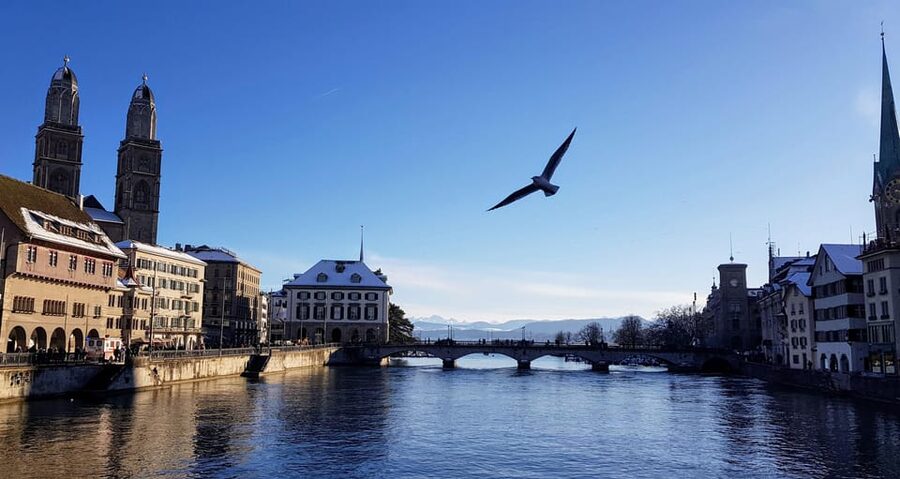
- Lindenhof viewpoint over the Limmat, a natural pause that also frames why Zurich mattered
- Church visits across denominations, including St. Peter, Wasserkirche, and the Grossmünster area
- Roman-era clues, like the Roman heater system and an archaeological window in the street
A short walk where Zwingli turned belief into action
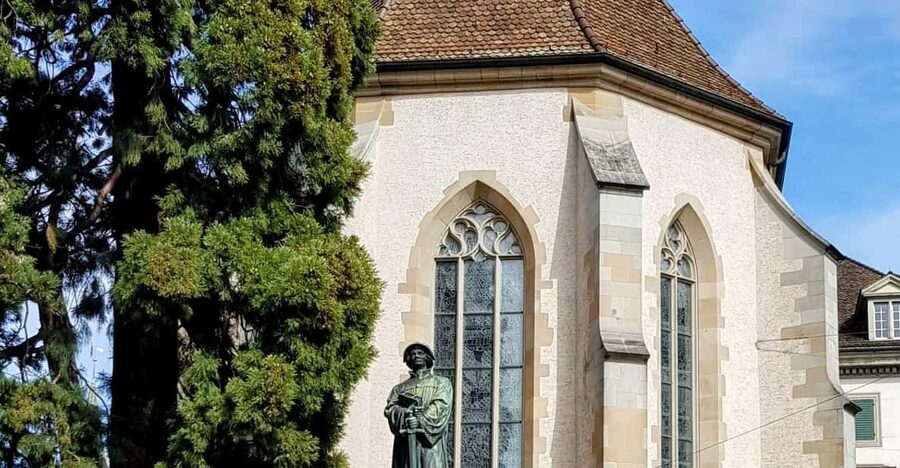
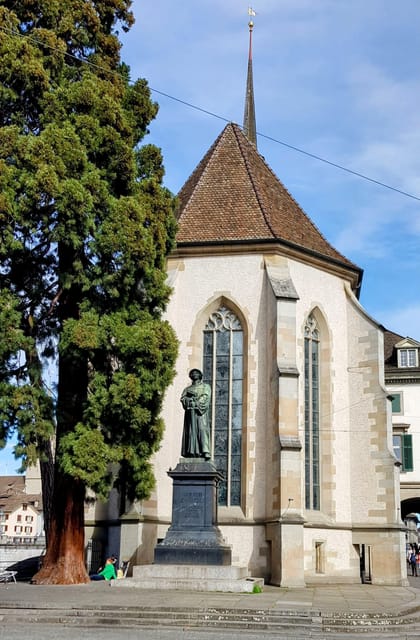
If you think Zurich is only about lakes, banks, and tidy streets, this tour gives it a harder edge. You will be walking through the Old Town while the guide connects what you see to the kind of arguments that shook Europe. The center of gravity is Huldrych Zwingli, the reformer who pushed Zurich into radical change more than 500 years ago.
What makes it feel different from a standard sightseeing loop is the narrative. Instead of “here is a building, it is old,” you get “here is why people fought about this,” followed by where that tension shows up in the city layout. You start to understand how a compact city can still be a loud stage for ideas.
A few more Zurich days worth weighing up
- Zürich Historic District Tour
★ 5.0 · 206 reviews - City tour historic old town Zurich
★ 4.7 · 38 reviews - Chocolate, Art, and History walking tour of Zurich
★ 5.0 · 15 reviews
Heiristeg first, then Zurich’s older layers
You begin at Heiristeg, near Uraniastrasse 1, which is a smart place to start because it puts you quickly into the Old Town rhythm. The meeting is straightforward, and if you prefer to start at Zurich main station, you can arrange that in advance.
From there, the tour moves through the parts of Zurich where you can feel multiple time periods overlapping. You will hear about the city’s Celtic and Roman origins and how later centuries built over the earlier ones. That matters because Zurich’s Reformation story did not happen in a blank space. It happened in a place that already had paths, power, and identity.
Lindenhof: the viewpoint that makes the city make sense
The walk includes a stop at Lindenhof, and this is more than a quick photo break. You get a guided look at the spot where Romans once stood guard, then you look out over the city and the Limmat. The view helps you understand why a city built around key crossings and vantage points can become a platform for big ideas.
I like that this stop slows things down. After moving through streets and details, you get a moment to orient yourself. It also makes the Zwingli story feel less abstract. When you can see where people would have gathered, debated, or traveled, the Reformation stops feeling like a timeline and starts feeling like a series of human choices.
Archäologisches Fenster and the Roman heater system
This is where the tour earns its “journey through time” promise. At the Archäologisches Fenster, you get a guided look that points you to how archaeologists reveal layers under the city. You are not just reading about the past, you are seeing how the past is literally embedded in the streets.
Then the route includes the Roman heater system. Even if you are not a Roman-history person, the appeal is practical. It is a concrete clue that Zurich was not always a medieval postcard. You start to understand how daily life, technology, and settlement patterns shaped the city long before reformers entered the scene.
These stops also work well because they break up the church-heavy portions. A few minutes here gives your brain a rest from Reformation arguments, then you are ready for the next cultural layer.
More things to do in Zurich:
- Lindt Home of Chocolate Museum Entry Ticket
★ 4.7 · 9,329 reviews - Zurich: Grindelwald, Interlaken & Lauterbrunnen Day Trip
★ 4.6 · 7,123 reviews - Zurich: City Tour, Cruise, and Lindt Home of Chocolate Visit
★ 4.5 · 4,624 reviews - From Zurich: Bus Day Trip to Heidiland and Liechtenstein
★ 4.5 · 2,531 reviews
Churches in rotation: St. Peter, Wasserkirche, and Fraumünster
The tour makes a strong choice by spreading your church time across several sites. That helps you track how religion was woven into Zurich’s identity, not confined to one building. You visit St. Peter’s Church, then Wasserkirche, and you spend a focused period at Fraumünster.
At St. Peter, you get a guided stop that frames the setting for what comes next. Wasserkirche is another key stop, and you will hear about its place in Zurich’s religious landscape as the tour narrative develops.
Fraumünster time, including the Chagall windows
Fraumünster is the centerpiece, and admission is included. You get to go inside, and the tour specifically highlights the choir area and the impressive Chagall window cycle.
Here is why this part is valuable even if you are not an art fan. The guide connects what you see to hidden layers of religious and social history, going beyond the windows themselves. One of the best details from the guide style is that Bruno uses short documentary-style clips during the tour to add context when your brain needs help. That makes the church feel less like a stop and more like a turning point.
Also, since the tour includes skip-the-ticket-line access, you spend more of your 2.5 hours actually experiencing, not waiting.
Grossmünster and the Zurich reform atmosphere
You will also visit the Grossmünster area. The tower is not part of what you get, so this is a good fit if you want the Reformation story over extra climbing. The visit is timed to keep the flow of the walk moving, and it connects back to the tour’s central question: why Zurich became a cradle for reform.
A key benefit here is atmosphere. Zurich’s Old Town feels like it was designed for walking. Between the river crossing areas and the church cluster, it is easy to imagine how public talk could spread. The guide keeps pointing out how debates had location and momentum, and you end up seeing the city as an engine, not a backdrop.
Rathausbrücke, legends, and the human side of reform
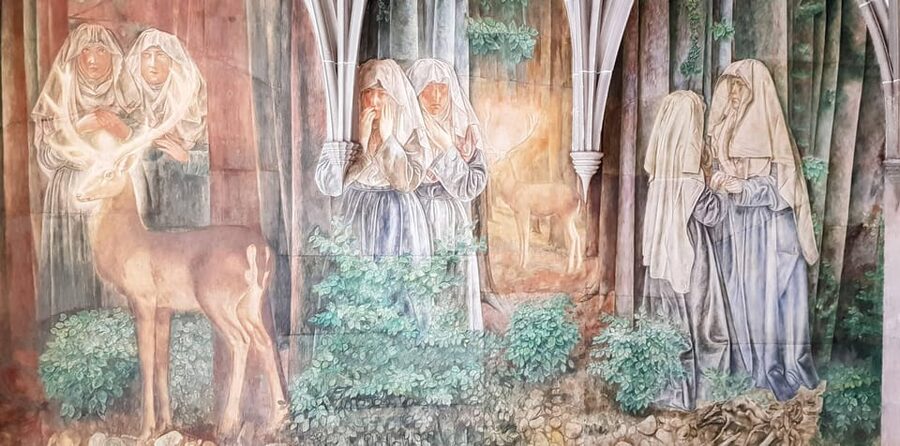
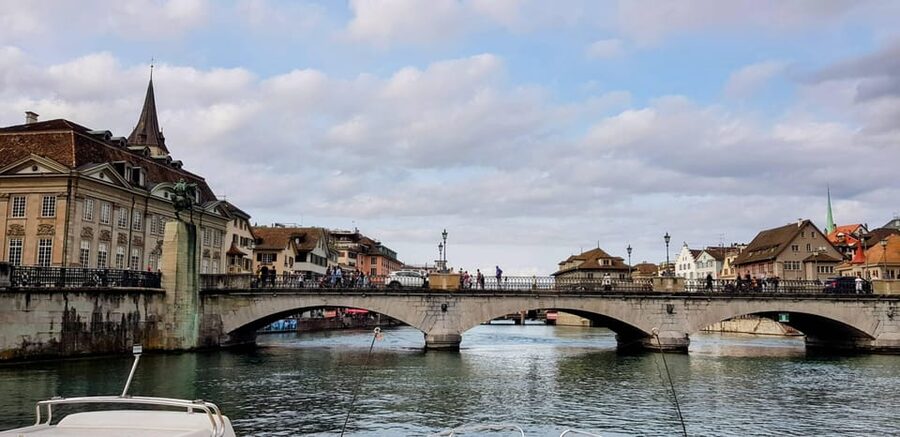
The route includes Rathausbrücke, a bridge stop with a short guided look. Bridges are useful story tools because they are natural chokepoints, and that is exactly where ideas can move. You also get layers of Zurich’s legends along the way, which adds a bit of texture to the purely historical parts.
One thing I like about this tour is that it does not treat the Reformation as a distant academic topic. It puts you in a street-level frame: where people stood, where messages could be heard, and why certain arguments mattered. That is what turns “history” into something you can picture.
You also see a stop connected to Hans Waldmann via a statue associated with Hermann Haller (1937). That kind of moment helps you connect reform history to later figures and how Zurich remembered itself.
Ehgraben and the quiet corners where stories linger
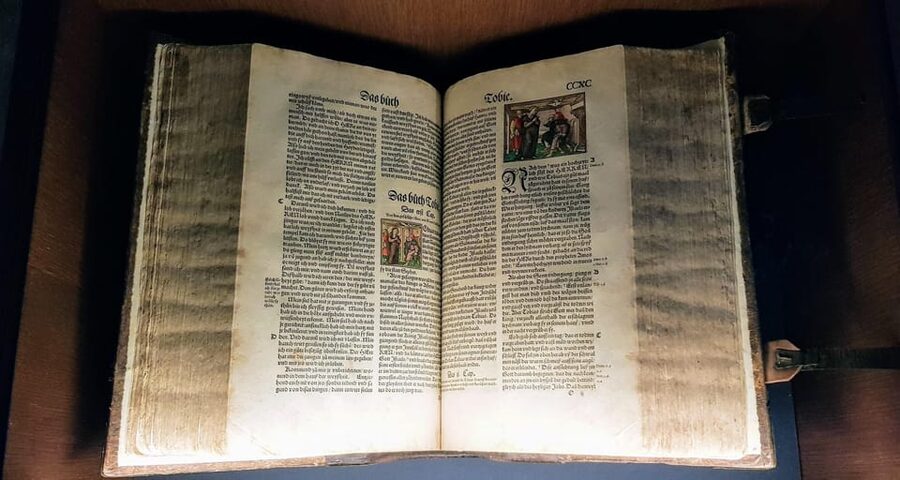
Later in the walk you will encounter areas like Ehgraben, with brief visits and guided comments that keep the story moving through smaller spaces. This kind of stop is easy to underestimate on a quick city tour, but it is exactly what makes a time-based walk work. The Reformation did not only play out on grand plazas. It also played out in the everyday city.
These shorter stops also help with pacing. After church interiors and major landmarks, you get small guided segments that keep your attention without turning the tour into a lecture. You leave with a sense that Zurich has layers, and the tour teaches you how to notice them.
Price and value: $194 for 2.5 hours that feel focused
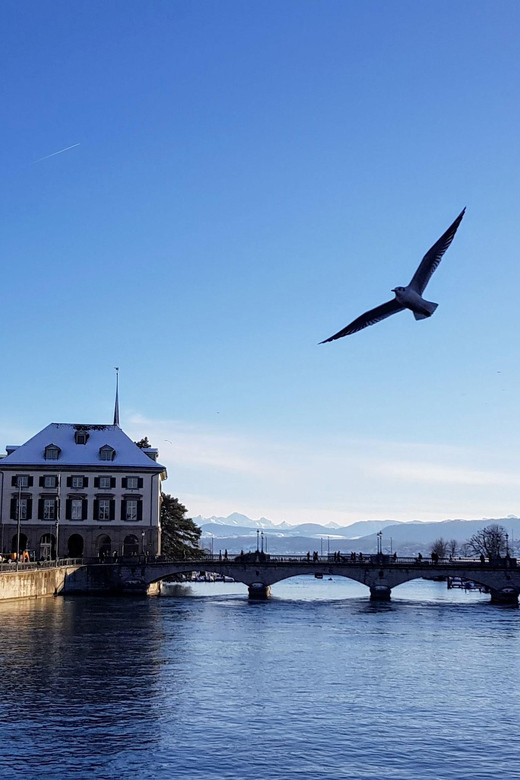
At $194 per person for about 2.5 hours, the price makes sense when you look at what is included. You are paying for a guided walk through the Old Town with multiple major stops, entry to Fraumünster, and skip-the-ticket-line access. You are also getting an accredited Fraumünster guide, not just a general city guide.
Private group format matters here too. It is easier to ask questions, and the guide can adapt pacing when you want more explanation on a point, like what Zwingli argued or how the city’s geography supported the movement. Based on the guide style noted in the feedback, Bruno’s storytelling is a major part of the value, especially his use of short videos and his careful, attentive delivery.
If you are traveling with someone who likes history but not museum crowds, this is a nice compromise. You get churches, archaeology-style street details, and Reformation context in a walk that stays under three hours.
Practical tips so you enjoy it more
- Wear comfortable shoes. Old Town Zurich is walkable, but it is still a lot of steps in a short window.
- Bring a layer for weather. You will be outside for much of the time.
- If you want to start from Zurich main station, arrange it ahead of time. Otherwise, plan to meet at Uraniastrasse 1 / Heiristeg.
- The tour is not suitable for wheelchair users, so choose an alternative format if mobility is a factor.
Who this tour is best for
This one is for you if you want Zurich with a spine. You will enjoy it if you like religious history connected to real locations, or if you simply want a deeper explanation of why Zurich became so influential in the Reformation.
It is also a good fit for first-time visitors who want more than “pretty Old Town” photos. The walking route plus the Fraumünster visit gives you a strong overview without turning the trip into a long day.
Should you book this Zurich time-and-Reformation tour?
I think you should book it if you want the Reformation explained in a way that matches where it happened. The tour’s biggest strength is its place-based storytelling, anchored by Zwingli-related sites and supported by a guided interior at Fraumünster.
It is also worth booking if you appreciate a guide who stays engaging. The strong feedback on Bruno highlights attention, friendliness, and clear explanations, and the added use of short background videos helps you follow the timeline without getting lost in details.
Only skip it if you dislike walking or need wheelchair access, since the format is not built for that. If you are comfortable on your feet for a compact Old Town route, this is an efficient way to see Zurich as a city that shaped European history.
FAQ
What is the duration of the tour?
The tour runs for 2.5 hours.
Where does the tour start?
The official meeting point is at the corner of Uraniastrasse 1 / Heiristeg. You can also meet at Zurich main station by prior arrangement.
How much does the tour cost?
The price is $194 per person.
Is Fraumünster admission included?
Yes. Admission to the Fraumünster is included, and you also get skip-the-ticket-line access.
Which languages are available?
The tour is offered in German and English.
Is this a private tour?
Yes. It is listed as a private group.
What does the tour focus on?
It focuses on Zurich’s origins (Celtic and Roman), the Old Town, Zurich legends, and the Reformation story tied to Huldrych Zwingli, including original Reformation sites.
Which churches are part of the tour?
You visit St. Peter, Wasserkirche, and Fraumünster. You also visit the Grossmünster area.
What is not included?
Grossmünster Tower access is not included, and food or drinks are not included. Access to Old Town churches after 17:00 is also not included.
Who is the tour not suitable for?
Wheelchair users, according to the activity information.
What is the cancellation policy?
Free cancellation is available up to 24 hours in advance for a full refund.
Newly reviewed around Zurich
- Zurich/Bern/Interlaken/Lucern: Jungfrau & Lauterbrunnen Trip★ 5.0 · 7 reviews
- Zurich: Virtual Reality Arena★ 3.8 · 6 reviews
- Zurich’s best-kept secret: the hidden world of mushrooms!★ 5.0 · 7 reviews
- Zurich: Stein am Rhein, Rhine Falls & Lake Boat Cruise★ 3.2 · 15 reviews
- Zurich to Rhine Falls: Unforgettable Private Day Trip★ 4.8 · 3 reviews
- Zurich: Private tour to Interlaken, Grindelwald & Jungfrau★ 5.0 · 3 reviews
- Zurich: Professional Photoshoot at the Best Spots★ 5.0 · 31 reviews
- Zurich Pub Crawl – Dionysos Zurich Pub Crawl★ 5.0 · 3 reviews
Historical Tours, compared.
Highlights of Geneva: Dark History Quest Experience
Read our review →
Chocolate, Art, and History walking tour of Zurich
Read our review →
Schwyz: Museum-Ticket Forum of Swiss History Schwyz
Read our review →Browse the lists this tour appears in