
Reviewed · OLD TOWN TOURS
Stories of Basel’s Old Town
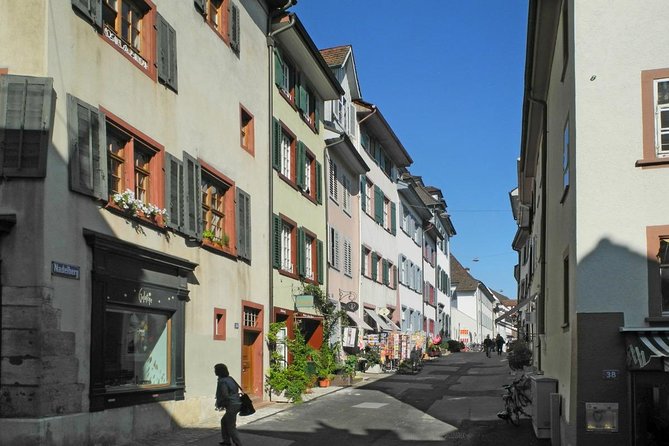
Basel has a talent for turning corners into stories. This 2-hour Old Town walk pairs famous landmarks with quirky local art, so you get history plus attitude without feeling rushed. You’ll follow a clear route that starts at Tinguely Fountain and ends near Spalenberg, hitting both medieval sights and Basel’s modern streak.
I love two things most. First, you get the classic postcard hits in smart order, especially Basel Minster with its red sandstone and twin towers. Second, the guide angle matters here, and many guides (like Doris and Hugo) are praised for keeping people engaged with clear explanations and good pacing.
One consideration: this is an English and German experience, and some groups report that the bilingual format can affect how much time English speakers get at each stop. If you are very picky about hearing every detail in English, you may want to plan a backup option or choose a tour that is fully English if one is available.
In This Review
- Key takeaways before you go
- Basel Old Town in 2 Hours, Built Around Real City Corners
- Starting at Tinguely Fountain, When Art Uses Water as a Stage
- Barfüsserkirche and the Historic Museum Connection
- Basel Minster: Red Sandstone, Twin Towers, and City Anchors
- Museum der Kulturen Basel, A Change of Lens Inside the Old Town Walk
- Marktplatz and Basel Town Hall, Where the City Governs Itself
- Andreasplatz to Spalenberg, Small Shops, Last Impressions
- Price and Value: Why $33.18 Can Actually Make Sense
- The Guide Factor, Including Doris, Hugo, and the Bilingual Trade-Off
- Itinerary Flow: What Each Stop Really Gives You
- Who Should Book This Old Town Walk, and Who Might Want a Different Format
- Should You Book Stories of Basel’s Old Town?
- FAQ
- How long is the walking tour?
- Is the tour in English?
- How many people are in the group?
- Do I pay entrance fees for the stops?
- Where do I meet and where does it end?
- Is food included?
- Is there free cancellation?
Key takeaways before you go
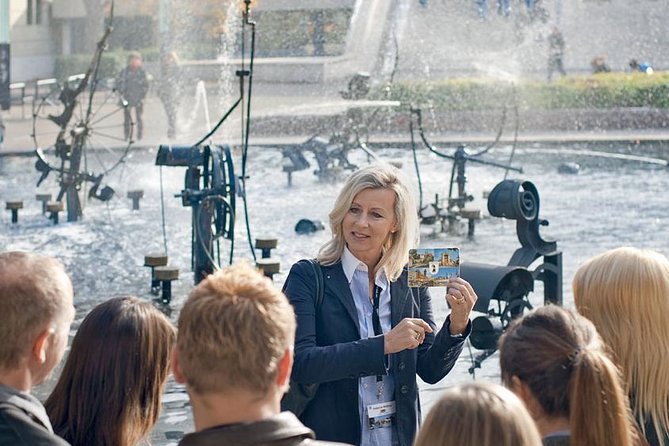
- Tinguely Fountain sets the tone with Jean Tinguely’s sculptural machines created in 1977, linked to the site of an older theater
- Barfüsserkirche as a museum stop pairs a historic church with Basel’s Historic Museum setting
- Basel Minster plus the Mittlere Brücke view gives you context for why this cathedral anchors the cityscape
- Museum der Kulturen Basel adds culture and world perspectives beyond the Old Town walls
- Marktplatz and Town Hall connect the city’s daily life with its government and parliament building
- A small group size (up to 25 people) helps the walk stay conversational, though crowds still affect hearing in a bilingual format
Basel Old Town in 2 Hours, Built Around Real City Corners
This is the kind of walk that works because it respects your time. In about two hours, you cover the essentials of Basel’s Old Town without a feeling of checking off random sites. The route is designed so each stop builds on the last, starting with a landmark that is almost pure personality.
And yes, Basel has personality. It’s not only medieval stone and religious architecture. You also get modern construction energy threaded into the story, which makes the city feel less like a museum and more like a place where people still live and argue and create.
The walk is doable if you have a moderate fitness level. It’s not described as grueling, but it is a true walking tour, with multiple short stops and relocation time between them.
More Old Town Tours in Basel
- Walking Tour through Basel Old Town
★ 4.7 · 1,040 reviews - Basel Historical Old Town Tour
★ 4.0 · 99 reviews - Basel Old Town Walking Tour With A Guide
★ 4.5 · 43 reviews
Starting at Tinguely Fountain, When Art Uses Water as a Stage
You begin at Tinguely Fountain at Klostergasse 7. This spot is small but memorable because Jean Tinguely’s work turns everyday water into mechanical theater. In 1977, he created sculptural machines in a shallow fountain where the old city theatre company stage once stood, and Basel gained a landmark with character right from the first minutes.
What I like about starting here: it instantly tells you what kind of city Basel is. You are not just learning dates. You are learning how Basel thinks, and how it can take something that used to be one thing, then reinvent it into something playful and strange.
Practical note: this stop is short, and admission is free, so it works as an easy opener before the bigger architectural moments.
Barfüsserkirche and the Historic Museum Connection
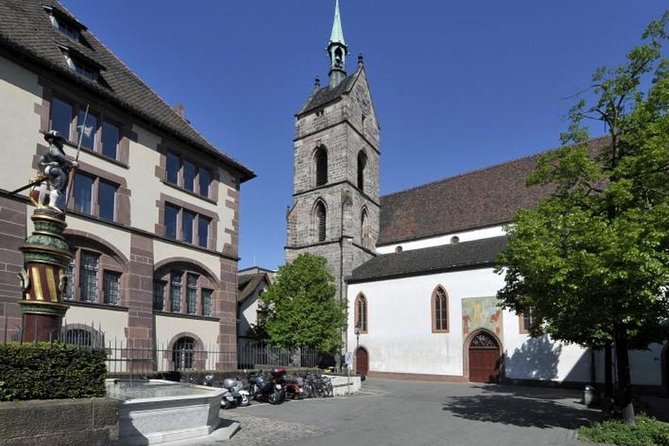
Next comes Barfüsserkirche, which today houses the Historic Museum of Basel. The church setting makes the museum feel anchored in the city’s older rhythm, even when the exhibits are telling newer stories.
This is one of those stops that gives you more than a photo. You learn to connect the idea of sacred space with how cities keep their memory. In Basel, the way heritage survives often includes reusing important buildings instead of freezing them in time.
The stop is brief and admission is free, so it won’t bog down your route. But it gives you a useful theme to carry to the cathedral and civic buildings later.
Basel Minster: Red Sandstone, Twin Towers, and City Anchors
Then you get to the big one: Basel Minster (Basler Münster). This cathedral is paired in your mind with the Mittlere Brücke, and the connection matters. Basel doesn’t just place landmarks next to each other, it builds viewpoints and visual relationships, so you understand why the Minster dominates the skyline.
The description of what makes it recognizable is spot on: red sandstone walls, colourful roof tiles, and twin towers. When a guide points out these elements, the building stops being a generic cathedral and becomes a specific Basel identity.
Tip for enjoying the Minster stop: stand where you can take in the full frontage, not just one close corner. The twin towers and roof coloring work best when you can see the whole composition at once, and that usually requires stepping back a little.
Admission is free for this stop, so you’re spending time, not money, at the place people usually want to spend more time than they planned.
More old town walks in Basel:
- Basel Historical Old Town Tour
★ 3.8 · 27 reviews - Basel Old Town Walking Tour With A Guide
★ 4.5 · 11 reviews - Award-Winning Geneva Chocolate &Old Town Tour with Boat Ride (3h)
★ 5.0 · 3,721 reviews - Zurich Old Town Walking Tour: 2-Hours
★ 4.6 · 1,008 reviews
Museum der Kulturen Basel, A Change of Lens Inside the Old Town Walk
Between the cathedral zone and the civic center, the route includes Museum der Kulturen Basel. Even if you do not go inside, having it on your path helps break the spell of only medieval architecture. Basel’s Old Town isn’t only about local faith and local politics. It’s also part of the wider world that ethnographic museums represent.
One fact worth keeping: the museum is described as among the leading ethnographic museums in Europe. That’s not a small claim, and it helps explain why this stop belongs on an Old Town story tour, not just a dedicated museum visit.
Since the tour details you have here do not explicitly confirm an entrance fee for this museum, I’d treat this as a learn-and-look stop first. If you want to spend real time inside, plan to check the current museum admission rules when you arrive.
Marktplatz and Basel Town Hall, Where the City Governs Itself
Now you shift from religious and museum spaces into everyday Basel life.
You pass Marktplatz, known for the lively market vibe. Even when you’re not stopping to browse, markets teach you something important: a city’s heritage is not only in its monuments, it’s also in its daily routines. Basel’s Old Town works because people still use the center, not just tourists.
Then the tour points you to the Town Hall, the seat of Basel government and parliament. From a sightseeing angle, it’s eye-catching with a red facade, a characteristic tower, and playful frescoes. From a story angle, it makes sense that civic power is embedded right in the Old Town core.
This is a great segment for the kind of guide who can connect symbols to real meaning. When the explanations land, you start noticing things you would normally ignore, like how architecture signals authority or how public space reinforces civic identity.
Andreasplatz to Spalenberg, Small Shops, Last Impressions
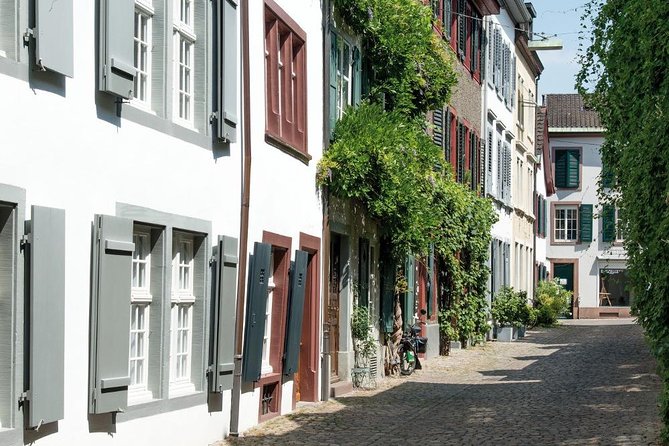
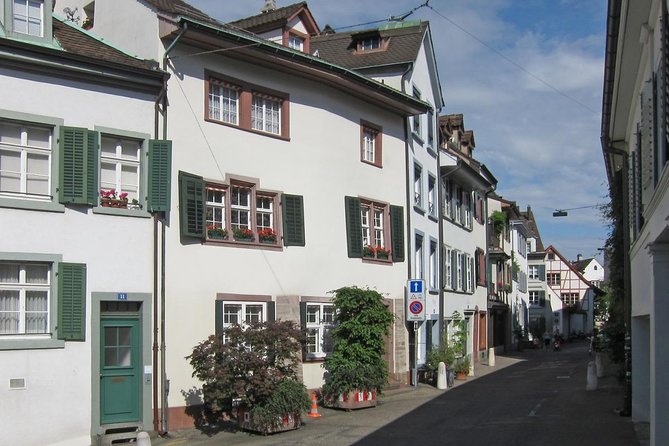
The final stretch goes through Andreasplatz, a square surrounded by little shops and beautiful houses. This is where you feel the Old Town shift from the big landmarks back to human scale.
I like this closing style because it gives your brain somewhere to rest. You’re not still trying to understand a cathedral or a government building. You’re just absorbing the neighborhood character, which is what makes Basel memorable after the last stop.
The tour ends at Spalenberg. That ending point matters because you do not feel trapped back at the exact starting zone. It can make your next move easier, whether you want to continue exploring on your own or grab transit.
Price and Value: Why $33.18 Can Actually Make Sense
At $33.18 per person for roughly two hours, you are paying for two things: a professional guide and a structured walk that hits high-signal sights in a short time. You’re not really paying for separate attractions, because many of the stops listed are marked as admission ticket free.
That free-entry detail is a big deal for value. If you were planning these sights solo, you might end up spending time figuring out what matters and how everything connects. Here, you gain a guided story route, and most key stops do not add paid entrance costs along the way.
Also, the small group cap (up to 25 people) helps keep the tour manageable. When groups are too large, guides lose control of pace and hearing. This one stays in a size range where you are more likely to get questions answered.
Finally, you get commentary in English and German, which can be a plus if you appreciate bilingual storytelling. Just know it can also be a drawback for pure-English listening, depending on your group’s composition.
The Guide Factor, Including Doris, Hugo, and the Bilingual Trade-Off
The biggest variable on any walking tour is the guide. On this one, multiple names show up in strong praise, and that tells you something: when the guide clicks, the whole experience clicks.
For example, Doris was described as engaging and sweet, and people said they learned a lot about Basel. Hugo earned praise for knowledge, enthusiasm, and humor, and the tour kept interest even during cold and rain. Doris and Hugo show the range you might get, from warm storytelling to energetic explanations.
There are other names in the same positive vein, including Bea, Jasmin, Susannah, Isabelle, Caroline, Thomas, Francis, Mark, and Sondra. The common thread across these mentions is simple: people felt the guide made Basel make sense, with a good rhythm and attention to details.
Now for the trade-off you should plan around. This is not sold as a strictly English-only format in the details you have. It includes English and German commentary, and depending on group composition, you can experience bilingual explanations from Sunday to Friday. Several issues in feedback point to the same practical problem: when the group splits by language, English speakers can feel they are waiting or hearing less time at certain stops.
Here’s how to handle this thoughtfully. If English is your priority, arrive ready to listen actively, and position yourself close to the guide at each stop, especially near the cathedral and market areas where crowds and noise can build. If you need every second to be in English, consider whether an English-only tour option exists through the same provider or another operator.
Also, one detail worth noting: some participants reported that there were no earpieces. That means hearing can depend on where you stand and how loud the crowd is.
Itinerary Flow: What Each Stop Really Gives You
Even though the stops are short, they each do a job.
- Tinguely Fountain gives you Basel’s creative identity fast, with water, machines, and a link to older theater space.
- Barfüsserkirche adds heritage through a working church building that now holds the Historic Museum of Basel.
- Basel Minster supplies the visual centerpiece, with architectural features and its connection to the Mittlere Brücke.
- Museum der Kulturen Basel broadens your lens beyond local landmarks, reminding you Basel is a European crossroads city.
- Marktplatz grounds the story in daily life, showing where people gather and trade.
- Town Hall translates architecture into civic meaning, making government feel part of the same Old Town you just walked through.
- Andreasplatz to Spalenberg closes on neighborhood scale, so the city sticks with you after the tour ends.
This is a tour built for orientation. If it is your first time in Basel, you leave with a mental map that helps you choose what to revisit later.
Who Should Book This Old Town Walk, and Who Might Want a Different Format
This tour makes the most sense if you want a fast, guided orientation that covers big sights plus a couple of character stops.
You’ll likely enjoy it if:
- you like walking and want an easy pacing with short, meaningful stops
- you want Basel Minster, Marktplatz, and civic buildings in one structured route
- you’re happy with a guide who tells stories through both architecture and everyday city life
- you appreciate culture stops, including Museum der Kulturen Basel
You might not love it as much if:
- you require every sentence in English
- you dislike crowd noise around major landmarks
- you struggle with listening when group bilingual translation creates downtime
Because the group cap is up to 25, you are not dealing with a massive mob. But you are also not in a private setting, so noise and crowd placement can matter.
Should You Book Stories of Basel’s Old Town?
I think this is a strong pick for first-time visitors who want to understand Basel in a short window. The value comes from the mix of landmark clarity, free-admission stops, and guides who are often praised for keeping the walk fun and structured.
If you speak English and want a mainly English experience, do your homework on the tour’s language setup for your travel day and time. If you end up in a bilingual split, just plan to stand close and listen actively at each stop.
If you want Basel in one afternoon chunk, this is the kind of tour that gives you a solid foundation, so your independent wandering later feels guided rather than random.
FAQ
How long is the walking tour?
The tour lasts about 2 hours.
Is the tour in English?
It is offered in English. The experience also includes commentary in English and German, and the tour may be bilingual depending on the group and day.
How many people are in the group?
The tour has a maximum of 25 travelers.
Do I pay entrance fees for the stops?
Many stops are listed with admission ticket free, including Tinguely Fountain, Barfüsserkirche, Basel Minster, Marktplatz, Town Hall, and Andreasplatz. The entry details for Museum der Kulturen Basel are not specified in the information provided.
Where do I meet and where does it end?
You start at Tinguely Fountain, Klostergasse 7, 4051 Basel. The tour ends at Spalenberg, Basel.
Is food included?
No. Food and drinks are not included.
Is there free cancellation?
Yes, you can cancel up to 24 hours in advance for a full refund.
Newly reviewed around Basel
- Traditional Swiss Dinner: Cheese Fondue, Appetizers/Dessert★ 5.0 · 5 reviews
- Zermatt & Mt. Gornergrat Small Group Day Trip from Basel★ 4.5 · 30 reviews
- The natural wonders of Switzerland: private tour from Basel (1 day)★ 5.0 · 18 reviews
- The Best of Basel’s Hidden Treasures: A Self-Guided Audio Tour★ 4.5 · 32 reviews
- Basel: Self Guided FoodTour★ 4.0 · 29 reviews
- Private Transfer Service from Basel to Basel Airport★ 5.0 · 3 reviews
- Tour on the vintage tram★ 4.0 · 8 reviews
- Private direct transfer: Basel to Zurich, English speaking driver★ 4.5 · 8 reviews
Old Town Tours, compared.

Award-Winning Geneva Chocolate &Old Town Tour with Boat Ride (3h)
Read our review →
Best of Geneva City Tour: International Area and Old Town
Read our review →
Browse the lists this tour appears in