

Reviewed · CITY TOURS
Revealing Lucerne: Self-Guided Audio City Tour
Lucerne has stories in every corner. This self-guided audio walk is interesting because it mixes the usual landmarks with 20+ frescoed house scenes and the city’s lesser-known past. I also like the professional English narration paired with route guidance that uses photos and turn-by-turn directions. One drawback to plan for: at up to 2 hours, the route can feel long if you skip slowly between stops.
You start at the Jesuit Church and follow a link right on your phone, with headphones. I like the structure because you can go at your own pace, yet still hit the key sights like Chapel Bridges and the Lion Monument. Just note it is not suitable for children under 16 or for wheelchair users.
In This Review
- Key things to know before you go
- Starting at the Jesuit Church: your Lucerne “audio launch pad”
- Chapel Bridges and the Lion Monument: Lucerne’s most famous views, explained well
- City Hall and Spreuer Bridge: where the guide turns architecture into a story
- The frescoed houses loop: the part you’ll remember longest
- Nölli Tower and the church circuit: St. Leodegar and Franciscan stops
- Weinmarkt, Hirschenplatz, and the Fritschi buildings: lighter moments with real names
- Ritterscher Palace and St. Peter’s Chapel: when details slow you down
- The harder stops: former orphanage, prison, and executioner’s house
- Price and logistics: does $13 feel worth it?
- Should you book Revealing Lucerne?
- FAQ
- Where does the self-guided tour start?
- How long is the audio tour?
- What language is the audio guide in?
- Do I need a live guide?
- What do I need to bring?
- Is the tour suitable for children or wheelchair users?
Key things to know before you go
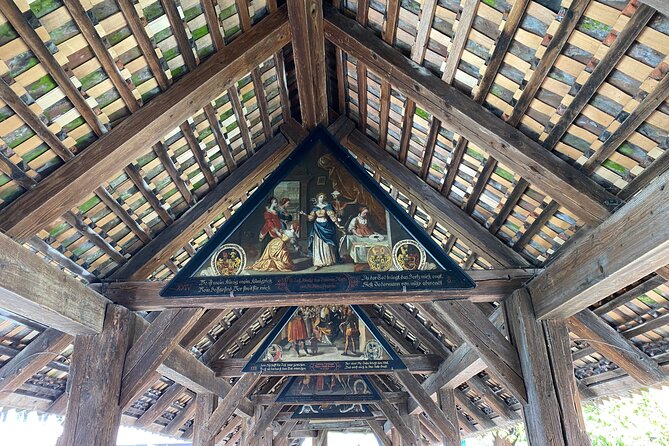
- English audio by a professional speaker, recorded for clear listening on the move
- Photo directions that help you find each stop without a live guide
- Frescoed houses: more than twenty building fronts with specific stories
- More than postcard Lucerne, including sites tied to an orphanage, prison, and an executioner’s house
- A set route built around major landmarks, from Jesuit and St. Leodegar churches to Weinmarkt and Hirschenplatz
Starting at the Jesuit Church: your Lucerne “audio launch pad”
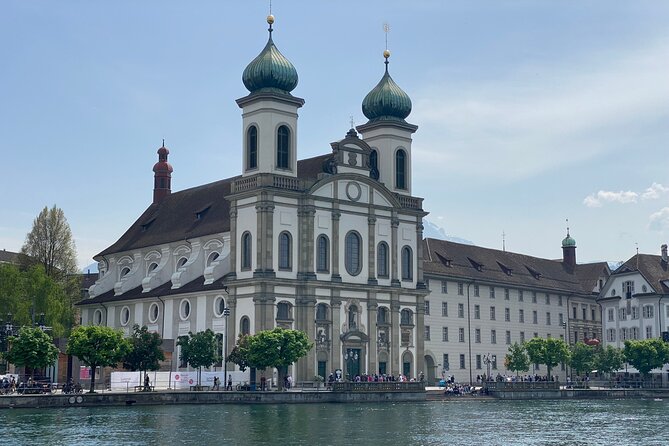
This tour begins at the Jesuit Church in Lucerne. That matters because it sets you up in the thick of the old town, where walking distances between major sights are manageable and the streets already feel like a storybook.
Because it is self-guided, your phone becomes the “guide.” After booking, you get a link, and you follow it on the spot. Bring headphones, a charged smartphone, and plan for internet access. If your connection is weak, the audio can become frustrating fast, since there is no live person to troubleshoot.
I like that the tour is designed to be practical. The guide doesn’t just name places, it gives you clear route explanations and detailed directions with photos. That is the difference between enjoying an audio tour and spending half your time trying to locate the next corner.
One small mindset shift helps: treat this as a guided walk, not a museum binge. Let the audio tell you what you are looking at, then pause for a minute to see it for real. When you do that, the route clicks.
More things to do in Lucerne:
- From Zurich: Mount Titlis with Ice Flyer & Lucerne Day Tour
★ 4.7 · 3,899 reviews - Lucerne: Mt. Pilatus Cable Car, Cogwheel Train & Lake Cruise
★ 4.7 · 2,338 reviews - Mount Pilatus Summit from Lucerne With Lake Cruise
★ 4.5 · 1,260 reviews
Chapel Bridges and the Lion Monument: Lucerne’s most famous views, explained well
Lucerne’s headline sights are where most audio tours start, and this one does too. You’ll work through the central cluster that includes the Chapel Bridges and the Lion Monument, plus nearby landmarks like the Water Tower.
The Chapel Bridges area is where you get the classic Lucerne photo angles, but the audio approach makes the visit more than surface-level. You’ll hear context about the buildings and the people who once lived around them, so the bridges feel tied to history instead of just being scenery.
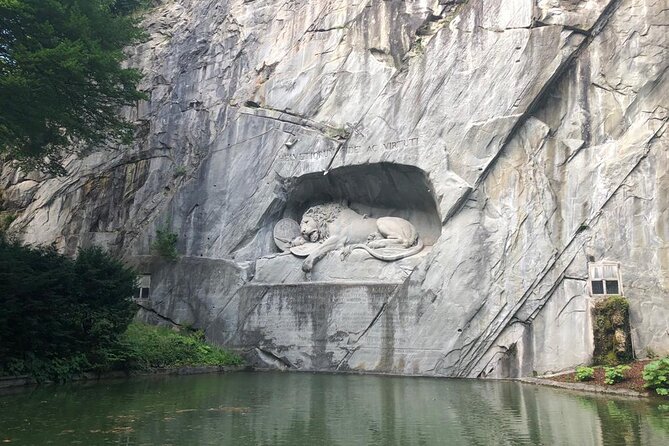
Then there is the Lion Monument, which people often visit with a quick glance. With an audio guide, you get time to understand why the monument is so emotionally loaded and how it fits the city’s wider story. Even if you only stand there for a short moment, having that context changes the experience.
The Water Tower is another good example of why this tour is worth your time. It is not as “stop for a photo and move on” as some landmarks, but it helps you see Lucerne as a working town with defenses, trade, and everyday life.
If you get stuck, don’t panic. Use the guide’s photos and directions. This is exactly the kind of place where a live guide would normally help, so using the visual support is key.
City Hall and Spreuer Bridge: where the guide turns architecture into a story
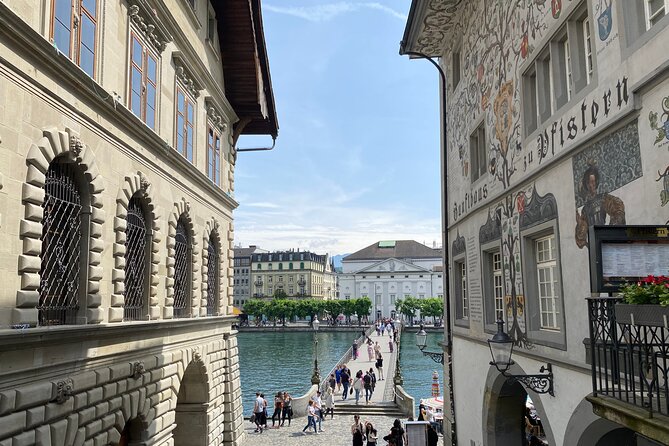
As you continue, you reach civic and artistic anchors like City Hall and the Spreuer area. This is where the audio starts doing something smart: it connects streets, buildings, and institutions, instead of treating every stop as separate.
City Hall gives you a sense of how Lucerne organized public life. You’re not just looking at a pretty facade. The audio helps you understand what kind of place it was, and why that mattered to the people living there.
The Spreuer area is especially good on an audio tour because it nudges you to look closely. Lucerne has a way of preserving details that you would otherwise miss while you are just walking. With narration in your headphones, you notice the building rhythm and the way the bridge and nearby structures fit together.
Practical tip: give yourself small “listening pauses.” When the audio switches from one idea to the next, stop walking for 30 seconds. That way you absorb the point before you turn the corner.
The frescoed houses loop: the part you’ll remember longest
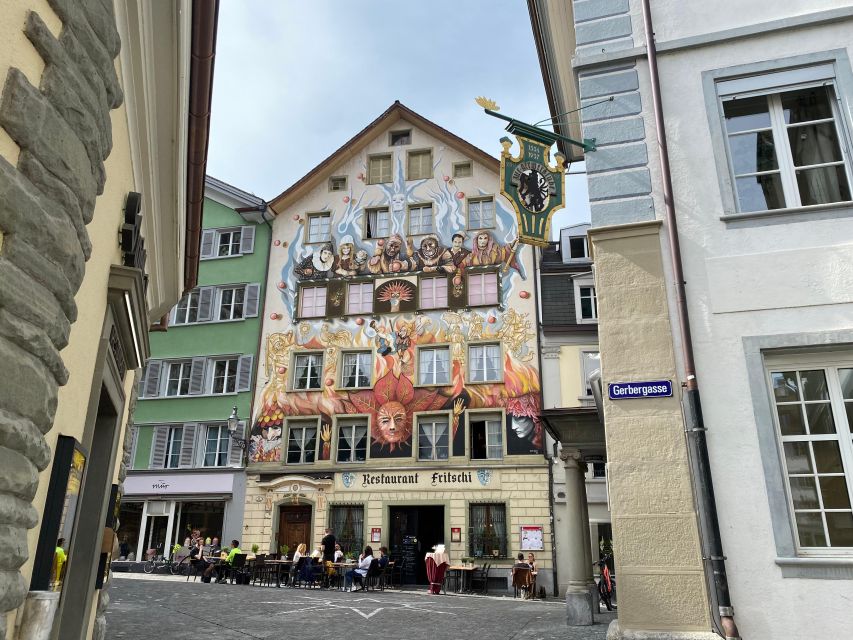
The strongest reason to pick this tour is the focus on more than twenty frescoed houses. Most people visit Lucerne for bridges and lake views. This guide pushes you onto the streets where stories are literally painted onto walls.
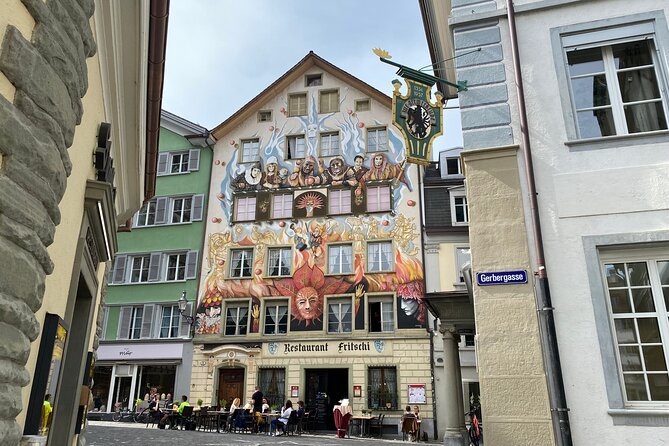
You’ll see different styles of fresco art and hear what each one is about. One example the guide highlights is a monochromatic scene featuring a dwarf doing the whimsical act of clysterizing the devil. That kind of detail is funny, strange, and very human. It makes you realize these were public images meant for everyday viewers, not just elite collectors.
Why this section is valuable is simple: frescoes can be hard to interpret on your own. Even if you love architecture, you might not know what you’re looking at. The audio fills the gap without slowing you down with extra explanations.
How to make this part work: expect you’ll naturally slow down. That is not a failure. It is the point. Frescoes reward close viewing, and the guide is built around that. If you try to speed through every stop, you’ll lose what makes these houses special.
If the audio timing feels tight, focus on the frescoes first, then treat the other landmarks as checkpoints. The fresco section is the memory anchor.
A few more Lucerne days worth weighing up
- Lucerne: Private Walking Tour with a Local Guide
★ 4.6 · 450 reviews - Lucerne: Guided Walking Tour with an Official Guide
★ 4.7 · 321 reviews - Mt. Rigi Self-Guided Tour: Lake Lucerne Cruise and Mountain Spa
★ 4.5 · 83 reviews - Exclusive Private Lucerne Walking Tour with Local Guide 3 Hours
★ 5.0 · 80 reviews
Nölli Tower and the church circuit: St. Leodegar and Franciscan stops
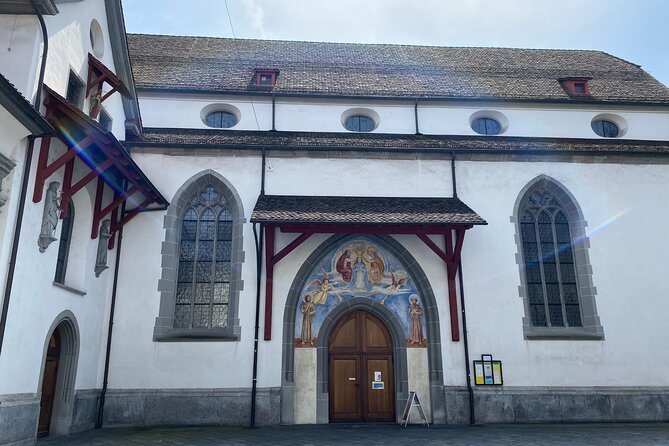
Lucerne’s churches are not just religious buildings here. They are major landmarks in the city’s layout, and the tour uses that to shape your walk.
You’ll encounter the Nölli Tower as part of this rhythm, then continue to churches including the Jesuit Church (your start), St. Leodegar Church, and Franciscan Church. That cluster works well because each stop adds a different layer of city life: architecture, community identity, and the way institutions shaped neighborhoods.
The audio approach is helpful because it guides your attention. Instead of wandering and hoping you notice what matters, you get a reason to look at specific features and understand why they show up where they do.
A practical note: churches tend to have quieter, more reflective spaces. If you are walking right through, you might miss the mood. I suggest stepping aside for a moment, even if the audio keeps talking. Let the narration set the scene, then take 20 to 40 seconds to look without multitasking.
If you are the type who enjoys architecture and symbolism, this church circuit is one of the best stretches of the route.
Weinmarkt, Hirschenplatz, and the Fritschi buildings: lighter moments with real names

Not every stop needs to feel heavy. This tour brings in lighter, street-level landmarks that keep the pace human.
You’ll pass Weinmarkt and Hirschenplatz, two spots that help you see Lucerne as a lived-in town. These are the areas where life would have happened daily, and the audio gives you a sense of why people gathered.
Then you’ll reach the Fritschi Fountain and Fritschi House. The guide’s naming here is a big plus. It prevents that common audio-tour problem where you think you’re at the right place but can’t confirm it. With a clear landmark like these, you know you are on track.
This section also helps balance the tour’s darker topics later. The frescoes can be playful or strange. The market areas and the Fritschi spots add a different kind of texture, so the full picture of Lucerne feels complete.
Tip: keep an eye on timing. This portion can feel like a breather, and you might drift into casual wandering. Staying loosely on schedule helps you reach the more sensitive sites without rushing.
Ritterscher Palace and St. Peter’s Chapel: when details slow you down
As the route continues, you’ll reach Ritterscher Palace and St. Peter’s Chapel. This is where the walking turns from “main sights checklist” into “slow look” territory.
Ritterscher Palace gives you a chance to focus on how power and wealth show up in buildings, not just in documents. The audio ties it into stories about people who influenced Lucerne’s life, including those who managed competition and political intrigue.
Then St. Peter’s Chapel adds a quieter, more intimate scale. Chapels can be easy to overlook if you only glance. With audio guidance, you can slow down and notice why this kind of space matters in the city’s spiritual and architectural world.
I like this part because it reminds you that a self-guided audio tour works best when it shapes your pace. Let the narration guide the importance, and let the building guide the time you spend.
The harder stops: former orphanage, prison, and executioner’s house
One of the most distinctive elements of this tour is that it does not stick to the postcard version. You’ll also visit places tied to a former orphanage, a prison, and an executioner’s house.
That choice is valuable for two reasons. First, it makes Lucerne feel like a real city with real consequences, not just a decorative historic center. Second, it gives you the full range of the past, including the parts that people often keep out of the spotlight.
The audio also frames these topics as part of everyday systems, linking them to stories of individuals who had wealth, faced competition, used politics strategically, sought entertainment, and helped others. That broad human range keeps the tour from feeling like a list of grim facts. You get context, which makes the sensitive stops easier to handle.
Practical suggestion: if you are sensitive to darker history, decide in advance how long you want to spend at these sites. You do not have to take every detail at face value in one go. Stop, listen, then step away when you feel ready to move on.
This section is one reason the tour rating is mixed. Some people enjoy the detail, while others find it too long or too descriptive. The good news is you control the pace.
Price and logistics: does $13 feel worth it?

At about $13 per person and running around 1.5 to 2 hours, this tour can be excellent value if you like walking and if you want more than the usual landmark sweep.
Here is what you get for the price, based on the tour design:
- A high-quality English audio guide with a professional speaker
- Clear route instructions with photos and detailed directions
- Major sights like Lion Monument, Chapel Bridges, and Water Tower
- A standout bonus layer: twenty-plus frescoed houses with stories
- Extra context stops tied to churches, a palace, and even former institutions tied to orphanage and prison life
When it feels worth it: if you enjoy architecture, street-level art, and city stories, this tour earns its money fast. The fresco section alone is the kind of thing you will not get from a quick walk.
When it might not feel worth it: if you have limited time or you dislike long narrated segments, be strategic. One review concern was that the tour can feel long and overly descriptive. Your best move is to treat the audio as the guide, not the law. If a story segment is running long, you can keep moving to the next stop and let the later highlights land.
One more logistics reality: since it is self-guided, you need a working phone, internet, and headphones. If that part fails, the experience loses its magic, so test your setup before you start.
Should you book Revealing Lucerne?
Book it if you want Lucerne with context. This is a good fit for people who like to walk, enjoy architecture, and want to understand what they are seeing beyond the obvious. You’ll probably love the frescoed house stops, because they add color, humor, and real detail that most standard sight tours skip.
Skip it, or at least reconsider, if you are short on time or you prefer lighter narration. The route can run close to the longer end of its time window, and it relies on the audio working smoothly. Also, it is not set up for wheelchair users and it is listed as not suitable for children under 16.
If you do book, go in with one plan: wear your headphones, keep your phone charged, and slow down for frescoes and church stops. That is where the tour’s strongest value lives.
FAQ
Where does the self-guided tour start?
The tour starts at the Jesuit Church in Lucerne. You will use the link provided after booking to access the audio and directions.
How long is the audio tour?
The tour lasts about 1.5 to 2 hours.
What language is the audio guide in?
The audio guide is in English.
Do I need a live guide?
No. It is fully self-guided, and there is no live guide on site.
What do I need to bring?
Bring headphones, a charged smartphone, and internet access.
Is the tour suitable for children or wheelchair users?
It is not suitable for children under 16 and it is not suitable for wheelchair users.
Newly reviewed around Lucerne
- Zurich: Adventure to Lucerne & Pilatus Gold or Silver tour★ 4.8 · 8 reviews
- Private Transfer: Lucerne to Zurich Airport ZRH by Business Car★ 5.0 · 11 reviews
- Private Transfer: Lucerne to Zurich Airport ZRH by Luxury Van★ 4.5 · 6 reviews
- The Lives and Legends of Lucerne: A Self-Guided Audio Tour★ 5.0 · 6 reviews
- Walking Tour – Around the Old Town Lucerne★ 3.5 · 3 reviews
- Touristic highlights of Lucerne on a Private half day tour with a local★ 4.0 · 5 reviews
- Natural Wonders of Switzerland from Lucerne (1 Day Private Tour)★ 5.0 · 21 reviews
- Private transfer from Lucerne to Zurich Airport★ 5.0 · 20 reviews
City Tours, compared.
City Tour, Cruise, and Lindt Home of Chocolate Visit
Read our review →City Highlights Tour by Bus, Cable Car, and Ferry
Read our review →
City Bus Tour with Audio Guide and Lake Cruise
Read our review →
City Tour with Lake Cruise + Optional FIFA Museum
Read our review →
Best of Geneva City Tour: International Area and Old Town
Read our review →
Best of Geneva City Tour with optional boat cruise
Read our review →
Browse the lists this tour appears in