
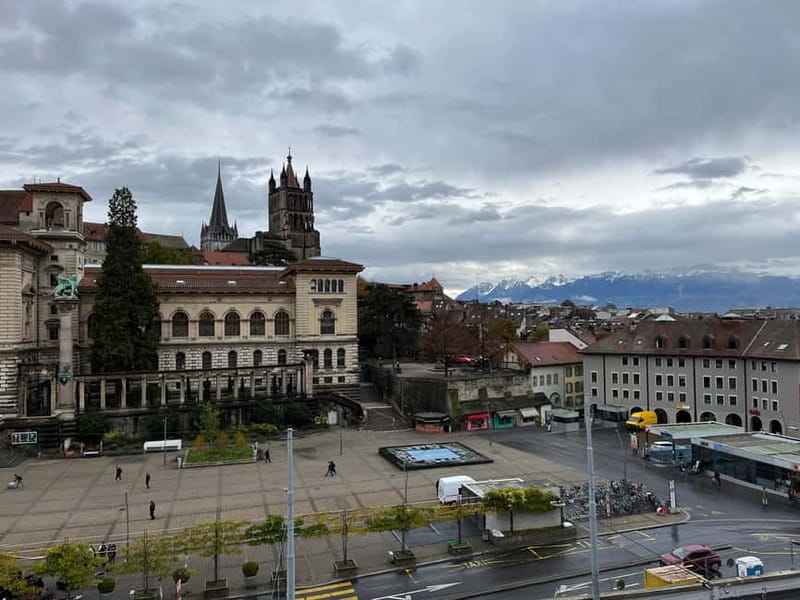
Reviewed · LAUSANNE TOURS
Discover Lausanne’s highlights with a local guide (EN)
Lausanne makes sense on foot. Kilian Megret turns streets into stories, with small groups and a big focus on the Lausanne Cathedral viewpoint. You get history, street-level culture, and practical context for where things are and why they look the way they do.
I especially like the way Kilian explains the city as a living system, from old waterways to how Lausanne functions today. One thing to consider: the route includes cobblestones, stairs, and some uphill sections, so it is not a great match if mobility is limited.
In This Review
- Key highlights you will feel right away
- Meeting at St-François: getting your bearings fast
- St-François Square and the medieval lane rhythm of Rue du Bourg
- Lausanne Cathedral: Gothic scale plus viewpoint payoff
- Rue Centrale and Pont Bessières: the city’s 20th-century shift
- St-Maire Castle and Parliament: where history and authority meet
- Palais de Rumine: sciences, culture, and a change of pace
- Palud Square and the Town Hall clock: the civic heartbeat
- Flon district: modern structure, street energy, and the city’s pulse
- Montbenon Hill: a leisure break with lake views
- Passerelle Lucy-Dutoit ending: a last look before you go off-script
- Price and pacing: is $65 worth your time in Lausanne?
- Who this walk fits best
- Should you book this Lausanne guided walk?
- FAQ
- Where do we meet for the tour?
- Where does the tour end?
- How long is the walking tour?
- What languages are available?
- How many people are in the group?
- Is the route mostly flat?
- Does the tour run in bad weather?
- What is included in the price?
- Are museum entrances included?
Key highlights you will feel right away
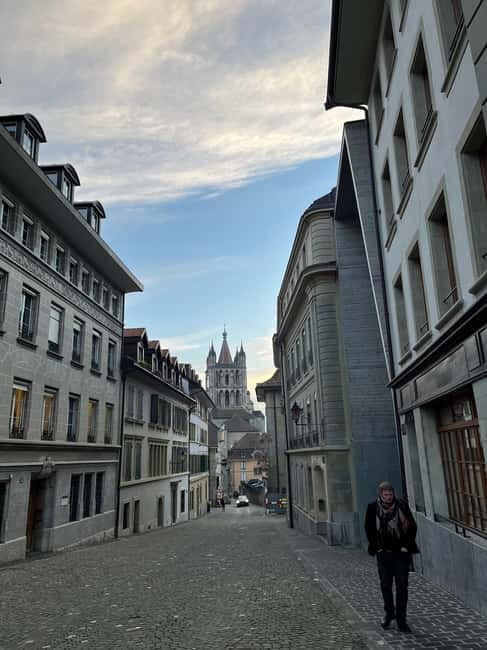
- Meet at St-François at Starbucks, then get your bearings fast in the city center
- Lausanne Cathedral visit with photo-friendly views over the city
- Medieval streets without the museum fatigue, using real streets as your guide
- Urban planning stories from Kilian’s engineer perspective, including how Lausanne developed
- Finish at Passerelle Lucy-Dutoit, a classic footbridge moment to cap the walk
Meeting at St-François: getting your bearings fast
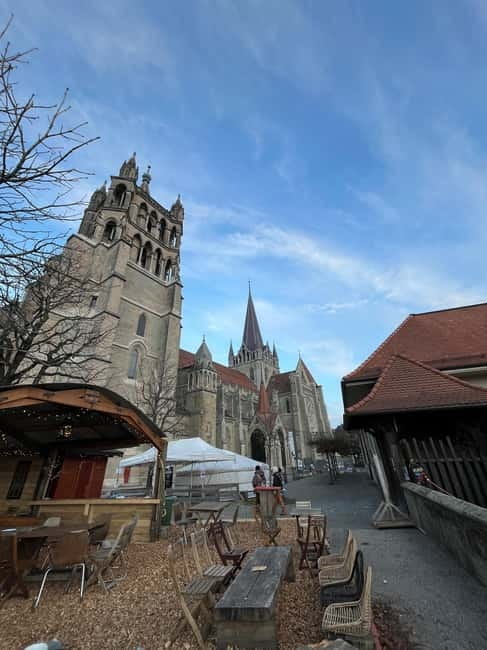
The tour starts right in the middle of Lausanne at 2, place St-François, in front of the Starbucks near St-François church. It’s an easy hub to find by foot, and public transportation is simple too, with buses to Lausanne, St-François station.
This matters more than it sounds. When your first minutes are smooth, the rest of the walk feels relaxed instead of chaotic. You also have a clear visual cue for who your guide is. Kilian may be wearing a straw hat, and he may also send a photo on WhatsApp so you can recognize him quickly.
Kilian Megret is the kind of guide who doesn’t just point at landmarks. He connects them to the city’s logic: where people move, how space evolved, and how daily life fits around the monuments. That engineering lens comes through, especially when he talks about infrastructure and urban development.
More things to do in Lausanne:
- The Olympic Museum Entrance Ticket in Lausanne
★ 4.5 · 211 reviews - Lausanne: 3-Hour Riviera and Lavaux Region Cruise
★ 4.2 · 185 reviews - Lausanne: The Olympic Museum Entry Ticket
★ 4.7 · 123 reviews
St-François Square and the medieval lane rhythm of Rue du Bourg
Your walk begins in St-François Square, a central gathering point where local life is already in motion. From there, you shift into the narrow, human scale streets that helped shape old Lausanne.
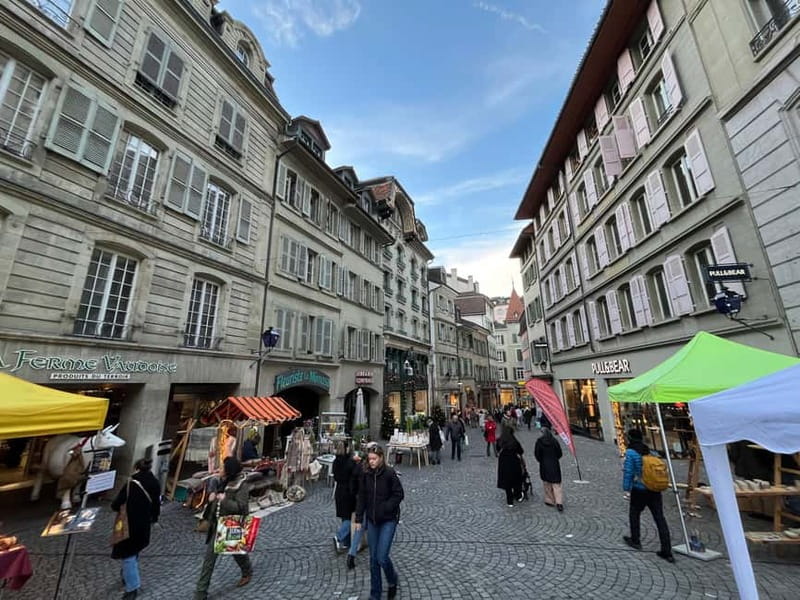
You will spend time with the atmosphere of Rue du Bourg and Rue du Rotillon, two streets known for their old-world character and their commercial energy. This is where you stop seeing a city as a list of sights and start reading it like a map. You can notice how storefronts, passageways, and doorways line up with the street bends and slopes.
What I like here is the pacing. Instead of rushing from one photo spot to the next, you get small context bursts. Kilian shares stories and anecdotes that help you understand what you are looking at. You also get a sense of which lanes feel like the medieval core and which ones show how commerce changed over time.
Practical tip: wear comfortable shoes. Even if you are not doing long climbs, cobblestones and tight corners can tire you out if your footwear is stiff.
Lausanne Cathedral: Gothic scale plus viewpoint payoff
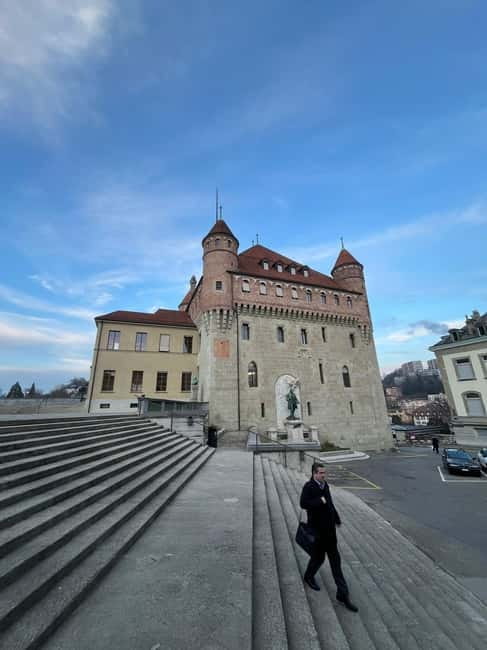
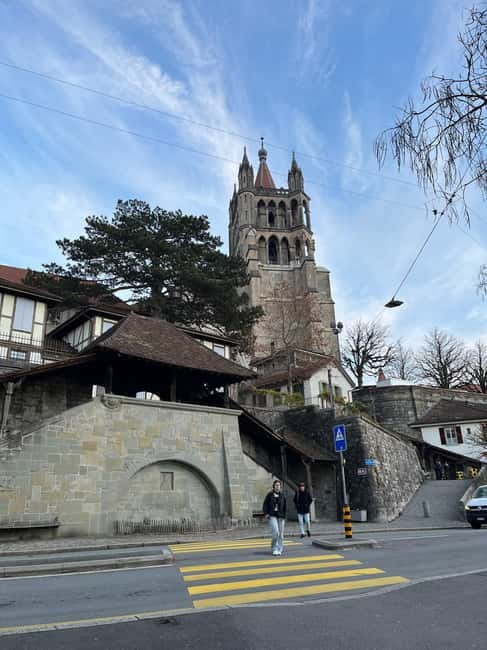
Next comes Lausanne Cathedral, one of the city’s biggest visual anchors. Expect a guided focus that balances architecture with viewpoint payoff. The cathedral is Gothic, and the point is not just to admire it from street level.
You get time to take in the building and then benefit from the vantage energy of the area. If you like travel photos, this is the kind of place where one good lookout beats ten quick snaps. The view helps you understand the city’s shape on the hillside, how neighborhoods stack, and how the old center relates to the modern parts.
This stop also ties into something Kilian does well: he explains how power and influence show up in the geography. When you understand that, the cathedral feels less like a standalone monument and more like part of Lausanne’s civic brain.
Time-wise, plan for about 20 minutes of guided exploration at the cathedral. If your group is chatty, it still works, because Kilian’s style is not a lecture. It’s conversation plus direction.
Rue Centrale and Pont Bessières: the city’s 20th-century shift
After the cathedral area, your route heads through Rue Centrale and across Pont Bessières. This stretch is a reminder that Lausanne is not stuck in the past. You can see how 20th-century planning shaped movement and building style.
Why this is worth your time: modern street design often looks boring until someone gives you the “why.” Kilian tends to explain how bridges and central streets support daily flow. Once you notice that, you stop walking through the city like a tourist and start walking like you are learning the route locals use without thinking.
The bridge segment is also good for a slower look. Even a short crossing changes your perspective, and you get a different angle on how the city sits against the terrain.
A few more Lausanne days worth weighing up
- Lausanne (City Center) Scavenger Hunt and Sights Self-Guided Tour
★ 4.5 · 14 reviews - Lausanne: Private custom tour with a local guide
★ 4.0 · 12 reviews - Lausanne: Private Walking Tour with a Local Guide
★ 4.8 · 10 reviews - Lausanne: Cultural and Historical Guided Walking Tour
★ 5.0 · 5 reviews
St-Maire Castle and Parliament: where history and authority meet
Your walk then moves into the realm of seats of power: St-Maire Castle and the Parliament area. It’s an effective shift because it connects civic history to physical space. You see how historic structures and government institutions occupy prominent locations.
These stops are not just about architecture details. They help you understand why certain areas feel important even if you are not sure what each building does. If you like the “who governed this, where, and why here” side of travel, this segment will land well.
Kilian’s anecdotes can also help you connect the past to present. He has a habit of explaining influence in plain language, which makes these stops feel more human and less like formal sightseeing.
Palais de Rumine: sciences, culture, and a change of pace
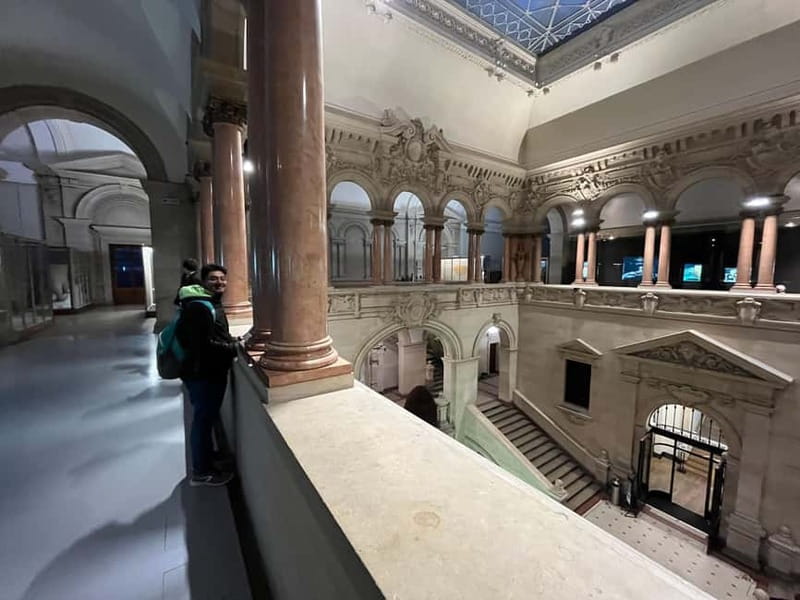
Then comes Palais de Rumine, highlighted as a palace for the sciences. Even if you are not stepping inside a museum during this tour, the building itself is part of the story. It signals how Lausanne values public learning, public culture, and intellectual identity.
This is a great mid-tour rhythm shift. You are still walking through the core, but the mood can soften a bit. The area around the palace gives you a chance to reset your brain after the heavier symbolic weight of cathedral and power structures.
Kilian can explain how the city supports these institutions. It’s also one of the moments when his infrastructure perspective feels especially relevant, because educational and cultural buildings often anchor future growth patterns.
Palud Square and the Town Hall clock: the civic heartbeat
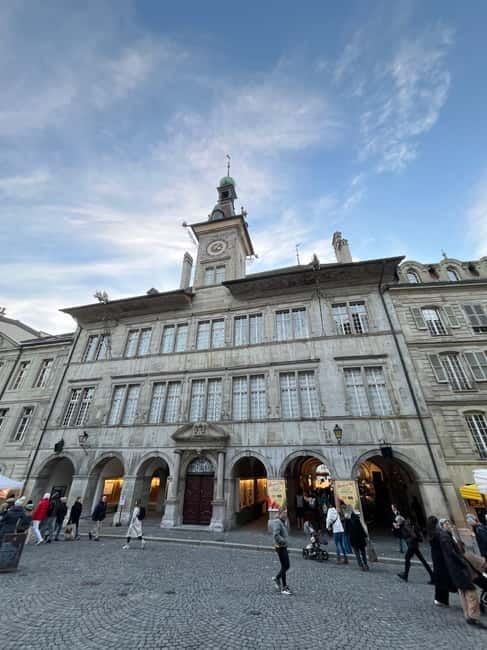
At Palud Square, you reach the civic heart. The Town Hall and its famous clock are easy to spot, but the real value is what comes with that sight: you understand that this is where the city expresses itself.
A clock might sound like a small detail, but in city terms it is a public tool. It shapes routines and gives the center a shared point of reference. In a place like Lausanne, it also reinforces how the center keeps working for people today, not just for postcards.
If you like photo stops, this is a comfortable one because square space lets you step back, frame, and breathe. If you prefer walking focus, you will still get meaningful context without getting stuck.
Flon district: modern structure, street energy, and the city’s pulse
From the historic core, you head toward Flon district, known for modern architecture and street art, plus lively street life. This is where the tour starts feeling more like a living city and less like a heritage walk.
Flon works because it contrasts with everything you saw earlier. When you compare medieval lanes with a modern district right after, your brain starts making connections. Why certain neighborhoods expanded, how people shifted, and what parts of the city stayed strong.
This stop is also a good reminder that a walking tour can do more than history. It can teach you how to notice the city as it is today, including youth culture, creative spaces, and the urban energy that keeps the center attractive at different hours.
Montbenon Hill: a leisure break with lake views
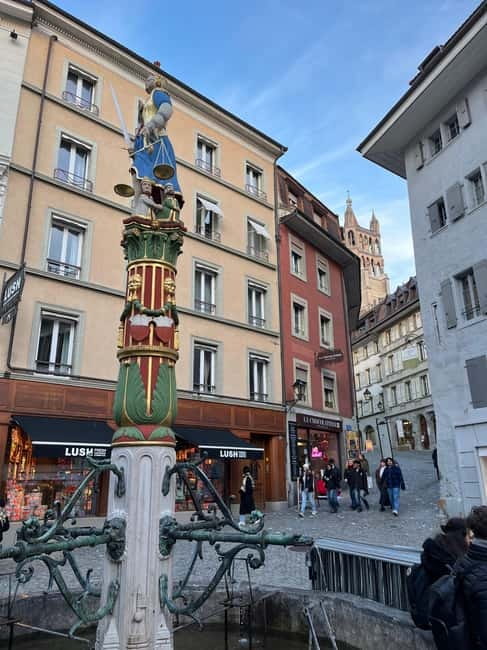
The tour climbs toward Montbenon Hill, a leisure area with a park and lake viewpoints. This is an important segment for two reasons.
First, it gives you breathing room. You step away from dense streets and into open sightlines, which makes the walk feel less compressed. Second, the views help you register Lausanne’s geography. Once you see the lake direction and the way the city steps along the hillsides, the earlier cathedral viewpoint makes more sense.
Fitness note: this is where you feel the uphill portions. The tour is designed to be adaptable, but the general requirement is moderate walking effort, including stairs.
If you come in with a reasonable pace and a good shoe choice, this is the kind of stop you will remember. It turns the final stretch into a payoff.
Passerelle Lucy-Dutoit ending: a last look before you go off-script
The tour ends at Passerelle Lucy-Dutoit, 1003 Lausanne. A footbridge finish is a smart way to end. It forces one last perspective shift, and you can take a final look at how different areas connect.
Now you have choice, and Kilian’s tour style supports that. He provides tailored suggestions for what to do next, depending on your interests.
Here are examples of post-tour directions you can expect to hear about:
- Ouchy Lakeside Promenade for lake and Alpine views
- Olympic Museum and Park, a tribute to the Olympic spirit
- Sauvabelin Tower, panoramic views from a wooden tower
- Hermitage Foundation, art and gardens in a historic mansion
- Lavaux Vineyards (UNESCO), with terraced wine landscapes
You do not need to follow every suggestion. The real value is that your guide points you toward the right next move for your energy level and your interests.
Price and pacing: is $65 worth your time in Lausanne?
At $65 per person for about 2.5 hours, this tour is priced like a quality guided experience rather than a quick overview. The value is not just that Kilian knows the landmarks. It’s that you get a small-group setting, usually 2 to 5 participants (with a max of 10), which keeps the walk personal.
That small group size matters because Kilian’s stories are interactive. You are not fighting over headsets or listening from far away. You can ask questions. You can slow down when you spot something interesting. You can also keep moving if you prefer momentum.
Also, the tour includes no museum entrance fees since no paid attractions are planned during the walk. That is good news if you want guidance without adding ticket costs. You can always decide later if you want to enter a museum or attraction on your own schedule.
Optional detail: you may have time for a coffee break if you want one. For many people, that single pause keeps the afternoon comfortable, especially if you walked uphill more than expected.
Who this walk fits best
This tour is a strong match if you want:
- a guided walking experience that explains context, not just names
- architecture and city planning stories
- a route that mixes cathedral area, civic spaces, and modern Lausanne
It is not suitable for wheelchair users or people with mobility impairments. It also is not set up for hearing-impaired visitors, so plan accordingly.
Language coverage is another plus. Kilian can guide in English, with French and German available on request. Many tours list multiple languages but the real test is how smoothly it flows on the ground. Kilian has a background living in Lausanne and speaks multiple languages, which helps you feel fully included.
What to bring is simple and practical:
- comfortable shoes
- camera or smartphone
- weather-appropriate clothing
- a reusable water bottle
The tour runs in all weather conditions except extreme events, so pack for rain or sun. Lausanne weather can shift quickly, and a hat or rain layer makes the walking part much more pleasant.
Should you book this Lausanne guided walk?
Yes, if you want a city walk that turns landmarks into understanding. Booking makes sense when you value a guide who can explain both the beauty of places like Lausanne Cathedral and the practical logic behind how Lausanne developed.
Skip it if you prefer a strictly self-guided route with minimal talking, or if stairs and uphill walking are a problem for you.
If you book, come with comfy shoes and curiosity. Kilian’s approach rewards that. You will leave with a clearer mental map of Lausanne, plus real ideas for what to do next around Ouchy, the lake, and even out toward Lavaux.
FAQ
Where do we meet for the tour?
You meet in front of Starbucks at 2, place St-François in Lausanne, near St-François church.
Where does the tour end?
The tour ends at Passerelle Lucy-Dutoit, 1003 Lausanne.
How long is the walking tour?
It lasts about 2 to 3 hours, with a listed duration of about 2.5 hours depending on pace and interests.
What languages are available?
The tour is mainly available in English, with French and German available on request.
How many people are in the group?
It is a small group, usually 2 to 5 participants, with a maximum of 10.
Is the route mostly flat?
No. It includes some uphill paths, downhill sections, and stairs, with cobbled streets. It requires a moderate level of fitness.
Does the tour run in bad weather?
Yes, it runs in all weather conditions except in case of extreme events.
What is included in the price?
You get a professional local guide and a 2 to 3 hour guided walking tour covering the main sights, plus stories, anecdotes, and tailored tips. You may also have time for a coffee break at your convenience.
Are museum entrances included?
No. Entrance fees to museums or paid attractions are not included, and paid attractions are not planned during the visit.
Newly reviewed around Lausanne
- Riviera Col du Pillon & Glacier 3000 from Lausanne★ 5.0 · 32 reviews
- Round trip cruise from Lausanne to Chillon★ 3.5 · 15 reviews
- Winter Gruyères, chocolate & cheese tour from Lausanne★ 4.5 · 10 reviews
- Lausanne (City Center) Scavenger Hunt and Sights Self-Guided Tour★ 4.5 · 14 reviews
- Discover Lausanne’s most Photogenic Spots with a Local★ 5.0 · 9 reviews
- Historic Lausanne: Exclusive Private Tour with a Local Expert★ 4.0 · 5 reviews
- Medieval Lausanne: A Self-Guided Audio Tour★ 3.5 · 3 reviews
- Taste Lausanne – A Full Swiss Food Tour by Do Eat Better★ 5.0 · 14 reviews
Lausanne Tours, compared.

Day Tour to Zermatt, Matterhorn & Glacier Paradise
Read our review →Browse the lists this tour appears in